
15 Sep 2026
If Government wants good growth in every postcode, rural postcodes need to be part of the plan.
As Government sets its sights on growth, living standards and public service reform this autumn, the Rural Services Network (RSN) is setting out six priorities to ensure rural communities are part of the national ambition.
The call comes as the RSN’s National Rural Conference 2026 takes place this week, online from 14–17 September, where rural leaders, local authorities, policymakers and practitioners from across England will come together to discuss many of the issues that will determine whether rural communities can thrive and contribute fully to the country’s future.
The Government has committed to delivering “good growth in every postcode”, with the ambition of spreading opportunity and investment more fairly across the country.
For the RSN, that ambition raises an important question: what does good growth in every postcode mean for rural England?
Rural England has enormous potential. It is home to innovative businesses, skilled people, natural resources and communities capable of making an even greater contribution to national prosperity.
Research commissioned by the Rural Coalition has previously shown the scale of that opportunity, finding that with the right conditions for rural growth, the national economy could benefit by an additional £50 billion annually, generating up to £19 billion in additional tax revenues.
But economic growth does not happen in isolation.
Businesses need people. People need affordable homes. Communities need access to health and care. Workers and young people need transport and digital connections to reach employment, education and training. And local authorities need the resources to deliver the services and infrastructure that underpin thriving places.
As attention turns towards the months ahead, RSN believes six areas should be central to delivering good growth in rural England.
1. Unlock Rural Growth
Rural England is not short of economic potential. What is too often missing are the infrastructure, investment and policy conditions needed to unlock it.
Rural businesses face challenges including access to skills and training, digital connectivity, transport and other essential services. Addressing those barriers can help businesses grow, create jobs and reach new markets.
Rural growth should not sit on the margins of the national growth agenda. It should be part of it.
2. Make Fair Funding Truly Fair
Delivering services across large geographical areas to dispersed populations comes with additional costs.
From waste collection and social care to transport and other essential services, rural councils often have to cover greater distances while serving fewer people.
A fair funding system must recognise the real costs of delivering comparable services in different places, giving rural authorities the ability to plan effectively, invest in their communities and support local growth.
Fair funding is not about special treatment for rural areas. It is about ensuring the system reflects the realities of delivering services in every part of the country.
3. Recognise the Rural Cost of Living
Where people live can significantly affect what it costs to go about everyday life.
Rural households spend on average £33 more each week on transport than urban households, while households experiencing fuel poverty in rural areas had an average annual fuel poverty gap of £636 in 2025, almost double that in urban areas.
Longer journeys, limited public transport, homes that can be harder and more expensive to heat, and greater distances from essential services can all add to household costs.
Policies aimed at raising living standards should therefore recognise that the cost of living, and the solutions needed to address it, can look very different from one postcode to another.
4. Deliver the Right Homes in the Right Places
The Government’s ambition to increase housebuilding presents a significant opportunity for rural communities, but numbers alone will not solve rural housing pressures.
Only 9% of homes in rural areas are classified as affordable, compared with 19% in urban areas, while rural businesses can struggle to recruit and retain staff because workers cannot afford to live close to their jobs.
Rural communities need homes of the right size and tenure, in places where people can access employment and services.
That means making sure national housing ambitions translate into the right homes, in the right places, at prices local people can afford.
5. Connect Rural Communities to Opportunity
Connectivity is about far more than broadband.
Reliable digital and mobile infrastructure is essential for modern life and business, but physical connectivity matters too. People need to be able to reach jobs, education, healthcare, shops and other essential services.
In January 2026, 70% of rural premises had access to gigabit-capable broadband compared with 92% in urban areas, while rural households continue to face higher transport costs and declining bus provision in many areas.
There is an opportunity to think differently about what successful rural connectivity looks like.
Rather than simply counting broadband connections, buses or passengers, success should ultimately be measured by something much more meaningful:
Can people get where they need to go and access the opportunities and services they need?
6. Make National Ambition Work in Every Place
The Government’s focus on devolution and giving local leaders greater power creates significant opportunities.
But rural communities are diverse. Some sit within mayoral strategic authorities; others do not. Whatever governance arrangements emerge, rural communities need a meaningful voice and the ability to shape decisions affecting their future.
The same principle applies across national policy.
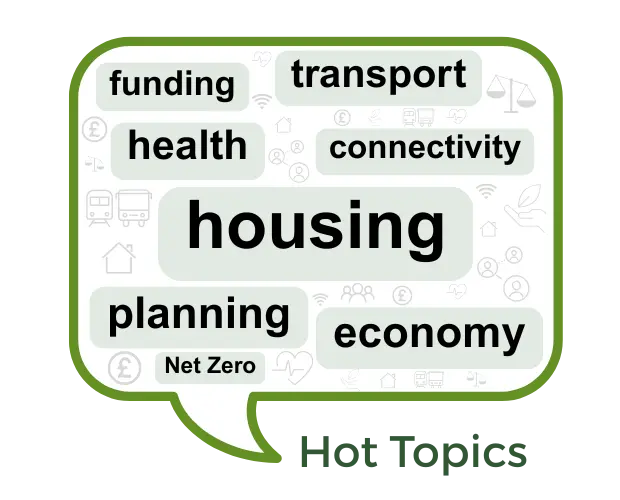
Housing, transport, health, digital connectivity, net zero and economic growth will not always look the same in a rural community as they do in a city.
Effective rural proofing can help ensure those differences are considered when policies are designed, not after they have been implemented.
If good growth is to reach every postcode, national ambition must be capable of working in every kind of place.
Cllr Roger Phillips OBE, Chair of the Rural Services Network:

There is a lot to be positive about in rural England. We have fantastic communities, businesses with real ambition and people who want to build their lives and futures in the places they call home.
That is why the ambition for growth and opportunity in every postcode really matters to us. It is an ambition we want rural communities to be fully part of.
If Government wants growth and opportunity in every postcode, rural postcodes need to be part of the plan. We want to work constructively with Government to help make that happen.
Kerry Booth, Chief Executive of the Rural Services Network:

What we hear time and again from our members is that rural communities don’t want special treatment. They want a fair opportunity to succeed and for the realities of rural life to be understood when decisions are made.
There won’t always be one solution that works everywhere. What matters is recognising those differences from the outset, using the right evidence and measures to properly understand rural need, and giving places the tools and flexibility they need to make things work locally.
Too often, traditional measures can mask what is happening in rural communities. If we are serious about delivering in every postcode, we need to be able to see and measure what success looks like in every postcode too.
The six priorities reflect many of the conversations taking place during the Rural Services Network National Rural Conference 2026, which runs online from 14–17 September and brings together speakers and delegates to explore the future of the rural economy, fair funding, housing and planning, digital connectivity, net zero, rural policy, health and care, and transport.