
10 Nov 2026
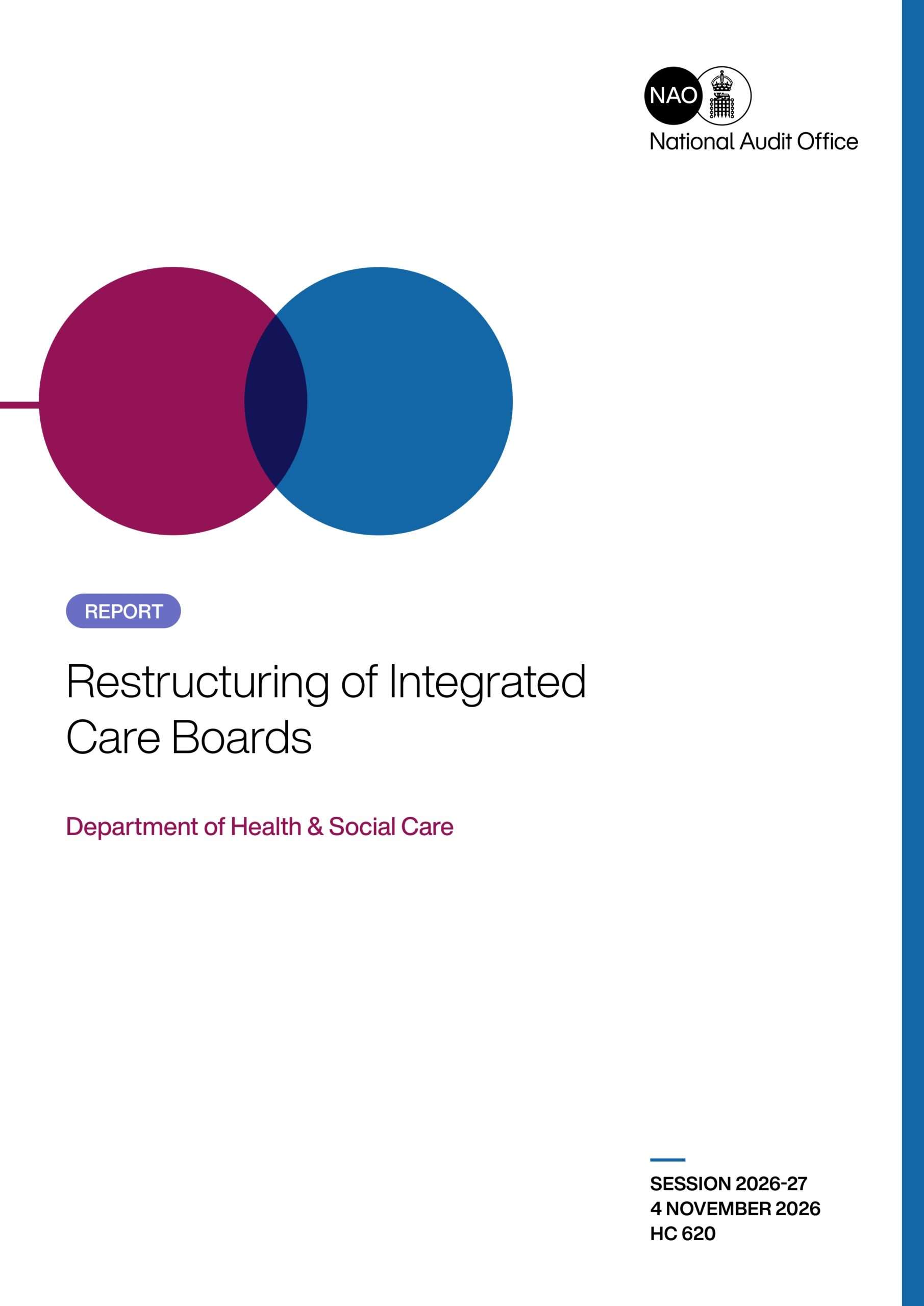
The NHS bodies that plan and fund local health services are cutting staff and reorganising. A new National Audit Office (NAO) report asks whether they will retain the expertise needed to do their jobs effectively.
Integrated Care Boards (ICBs) decide how NHS funding is used to meet health needs in their areas, working with GPs, hospitals, councils and other local partners.
NHS England has asked them to reduce their running costs by an average of 43%, aiming to save £908 million a year. It estimates this will require around 8,000 fewer full-time equivalent posts, approximately a third of the ICB workforce.
The aim is to reduce duplication and give the boards a clearer focus on planning services around people’s long-term health needs.
Some boards have merged or started sharing leadership and teams. By April 2026, there were 25 boards or groups of boards, compared with 42 individual boards previously.
Making Savings While Retaining Expertise
The NAO found that these changes offer opportunities to cut costs, share expertise and improve how services are planned. However, it is not yet clear whether boards will retain enough staff with the right skills to carry out their responsibilities.
Councils interviewed for the report said staff changes and the loss of experienced NHS colleagues had already affected joint projects and made it harder to plan and fund services together. They were concerned that councils could be left with gaps to fill.
Some boards also expected to spend less on preventing ill health and developing care closer to home, both priorities in the government’s ten-year health plan.
Keeping Sight Of Rural Needs
The report does not examine rural impacts separately, but its findings raise questions for rural communities.
Planning care in rural areas means understanding the distances people travel, the transport available and the challenges of bringing services closer to home. As boards cover larger areas, retaining staff who understand individual communities and have strong local relationships will remain important.
The NAO is calling on the Department of Health and Social Care and NHS England to make boards’ responsibilities clear, protect essential skills and maintain strong partnerships with local organisations.
For rural communities, the question is how these changes can deliver savings while preserving the knowledge and working relationships needed to plan services that people can access.