09 Mar 2026
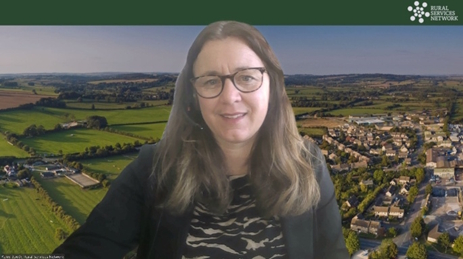
The Rural Services Network’s Chief Executive, Kerry Booth, recently gave evidence to a parliamentary inquiry exploring how rural communities fit within the Government’s devolution agenda.
The session formed part of an inquiry by the All-Party Parliamentary Group (APPG) for Rural Business and the Rural Powerhouse, which is examining how devolution is understood in rural areas and what steps are needed to ensure rural communities benefit from new governance structures.
Chaired by John Milne MP, the panel brought together voices from across the rural sector. Alongside RSN Chief Executive, Kerry Booth, witnesses included Cllr Bridget Smith, Leader of South Cambridgeshire District Council and Vice Chair of the District Councils’ Network; Corrinne Pluchino, Chief Executive of ACRE; and Gordon Hector, Trustee of Plunkett UK.
 |
During the session, Kerry highlighted the importance of recognising the unique challenges of delivering services in rural communities. She told parliamentarians that national policy too often adopts a “one-size-fits-all” approach which fails to reflect the realities faced by rural councils and service providers.
Delivering services in rural areas can involve longer travel distances, complex logistics and higher operational costs. For example, waste collection may require smaller vehicles travelling longer routes, while councils sometimes receive very few – or even no – bids when tendering for services, increasing delivery costs.
Kerry also emphasised that rural communities are diverse, with factors such as geography, connectivity and remoteness shaping very different local circumstances.
A major focus of her evidence was the funding inequality faced by rural local authorities. Kerry highlighted that for 2026/27, urban councils will receive 32% more in Government-Funded Spending Power per head than rural councils, while rural residents pay around 17% more in council tax on average.
She raised concerns that the Government’s new Local Government Funding Formula does not adequately recognise the additional costs of delivering services in rural areas, particularly following the removal of wider remoteness adjustments. She also questioned inconsistencies in the use of deprivation data in funding allocations and highlighted how traditional measures can fail to capture the dispersed and often hidden nature of rural deprivation.
The discussion also explored how rural communities view the devolution agenda. Kerry noted that for many residents, devolution can feel remote and urban-focused, particularly in areas without large towns around which governance structures are built. She also highlighted confusion among the public about the difference between devolution and local government reorganisation.
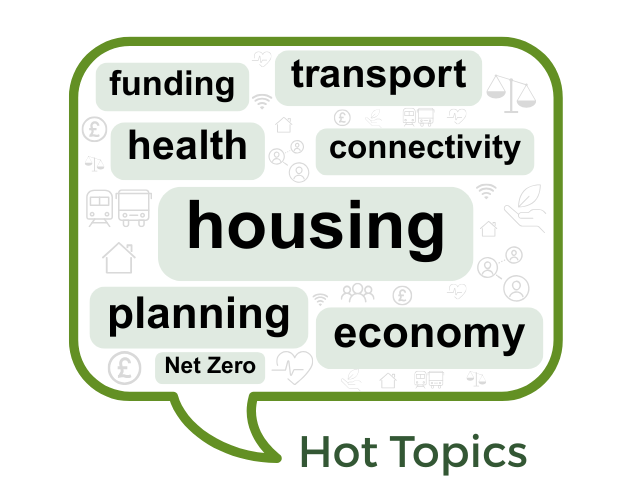
Looking ahead, Kerry emphasised that devolution has the potential to support rural economic growth, but only if the right foundations are in place. These include improved digital connectivity, better transport links, and the delivery of affordable rural housing.
When asked what advice she would give to future Mayors and strategic authority leaders, Kerry’s message was clear: understand and include rural communities. That means using the right data and metrics, developing policies that reflect rural realities, and ensuring fair funding for rural services.
Only by recognising the distinct needs and opportunities of rural areas can devolution truly deliver for every person, in every place.