The post Households not connected to the gas network appeared first on Rural Services Network.
]]>
Rising energy bills and changes the Government is introducing to how we heat our homes means that it is important that local councils know the make-up of their local area and housing stock.
The RSN has produced an analysis examining the proportion of households not connected to the gas network at local authority level. The analysis covers the period from 2015 to 2022 and allows selection of authority or class and classification averages.
Points of note from the analysis include:
- The proportion of households not connected to the gas network is greater in Predominantly Rural areas of England than seen in England as a whole.
- The percentage is relatively static in England, but reduced in Predominantly Rural local authority areas over the period considered here.
- Metropolitan Districts have the lowest proportion of households not connected to the gas network.
– Download the ‘Households not connected to the gas network’ analysis here
The post Households not connected to the gas network appeared first on Rural Services Network.
]]>The post Rural Fuel Poverty Gap widens appeared first on Rural Services Network.
]]>
Annual Fuel Poverty Statistics published on 28 Feb 2023 for the year 2022 show that in 2022, households living in rural areas have a higher rate of fuel poverty and a much larger fuel poverty gap
Households living in rural areas have the highest fuel poverty rate of 15.9% in 2022 compared to urban areas having the overall median rate of 13.4%. This has increased from the previously where both rural and urban areas had a fuel poverty rate of 13.5% in 2020.
In addition, the statistics confirm the figures for off gas grid housing with 52.6% of rural properties being off the gas grid compared to just 9.8% of urban properties. This has huge implications for rural communities if the Government presses ahead with its plans to move properties off the gas grid to electric heat pump systems about 10 years ahead of those using gas. The report highlights how households in rural areas are on average in much less energy efficient homes which would mean that households would need to spend a significant amount of money, often tens of thousands of pounds in ensuring that they are energy efficient and able to support an electric heat pump system.
One of the most startling figures in the recently published statistics is the fuel poverty gap. The fuel poverty gap is the additional income which would be needed to bring a household to the point of not being fuel poor.
For rural areas, using 2020 figures, this was £501 with urban areas at around £200. In 2022, these figures are astronomical for rural area with the fuel poverty gap sitting at £956 compared to the lowest fuel poverty gap in London at £223.
Research by the Rural Services Network last year showed that a devastating triple blow of higher household and transport energy poverty, along with lower wages earnt in rural areas pushes rural communities into a cost of living emergency.
This research can be viewed here
As can be seen by the statistics recently published by the Government, they need to take action to support our rural communities so that they are not further penalised by the cost of living crisis and the choice of whether to heat their homes, or feed their families.
See more information here
The post Rural Fuel Poverty Gap widens appeared first on Rural Services Network.
]]>The post Additional cost of living payment will be paid to millions of households who use oil, LPG or biomass boilers to heat homes appeared first on Rural Services Network.
]]>
Chronicle Live reports that North East families living in rural County Durham and Northumberland who have no mains gas will be receiving an additional £200 cost of living payment in the new year
The Alternative Fuel Payment, which will be given to up to four million households who rely on fuels such as heating oil or LPG, will be made “as soon as possible in the New Year”, according to the Government.
The £200 payment is in addition to the £400 energy bill support scheme all households with an electricity supply receive.
If you’re eligible for the payment, you should get the money automatically from your electricity supplier, most likely as a bill credit on your electricity bill.
Because there is no register of people who do not use mains gas for their heating, the Department for Business, Energy and Industrial Strategy (BEIS) said it was “working at pace with stakeholders to identify the best method of identifying eligible customers and making payments to them in a way which is as easy as possible”.
Fuel article:
Chronicle Live – Families with no gas will get extra £200 to help pay for heating in the new year
The post Additional cost of living payment will be paid to millions of households who use oil, LPG or biomass boilers to heat homes appeared first on Rural Services Network.
]]>The post Calls for more help for off-grid energy homes appeared first on Rural Services Network.
]]>
The BBC report that more support is needed for homes relying on heating oil or Liquefied Petroleum Gas (LPG), according to councillors in Oxfordshire
The government is giving off-grid energy consumers an extra payment of £100, but there are calls to help people make the switch to renewables.
According to Oxfordshire County Council, 20,000 of its residents use LPG or oil as their main heating.
The government said it recognised people were struggling.
Uffington resident and parish council chair Mike Oldnall, who uses oil to heat his home, said the “hit of [an extra] £300 every time you fill your oil tank up is going to have some impact somewhere”.
Sally Povolotsky, a councillor in the rural area of Hendreds and Harwell, said: “I’m worried about the physical health of my residents who are too scared to even put their heating on because they’re worried about that oil tank just draining down.
Leader Liz Leffman said local Citizens Advice Bureaus had people coming in for food vouchers because they were spending so much on LPG and oil.
The council voted to write to the government asking it to create a package for rural communities with grants for renewables or air source heat pumps, or to switch to biofuel boilers. Government figures show 55,000 households are not connected to the gas grid in Oxfordshire.
The BBC – Oxfordshire: Calls for more help for off-grid energy homes
The post Calls for more help for off-grid energy homes appeared first on Rural Services Network.
]]>The post Reaching Rural Properties appeared first on Rural Services Network.
]]>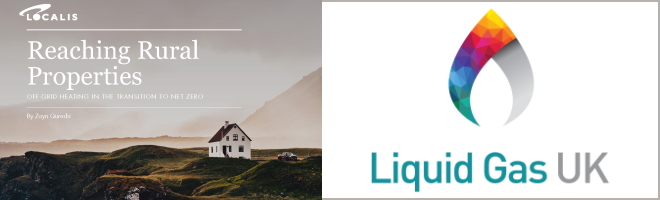
The Yorkshire Post reports on a new report launched by Localis, an independent think tank, titled Reaching Rural Properties: Off Grid heating in the transition to net zero
The article states:
‘Localis argues that off grid households should not be penalised for their location and that government should extend and make equal the 2035 deadline for all homes.’
It highlights how the current Government strategy for decarbonising off-grid heating is a one size fits all approach, which isn’t fit for purpose. It doesn’t consider the needs of homes and businesses in rural areas, or the complexity of heating rural properties, which are typically harder to heat and expensive to retrofit.
The report was the result of research into the challenges facing rural properties, along with two roundtable discussion events. The Rural Services Network participated in one of these sessions, highlighting the unfairness of the one size fits all policy that puts rural communities at a disadvantage.
The report makes 3 key recommendations along with some key asks of Government.
1Government Policy: Localis Recommendation: |
2Government policy: Localis Recommendation: |
3Government policy: Localis recommendation: |
In addition, they highlight:
The electricity infrastructure in rural areas is in many places not prepared for a widespread switch to electricity as a primary heating source. It is important that the Government build a programme of electricity infrastructure upgrade in rural areas into the roadmap to net zero.
The current EPC methodology is not well suited to application in off grid homes. The Government should review the EPC methodology with the aim of redressing the unequal impact on off-grid homes.
The Rural Services Network was at the launch of the report last week in Westminster to participate in further debate about the issues raised along with industry representatives, rural organisations and government representatives.
The RSN has previously highlighted some challenges for rural areas as a result of the Governments Heat and Buildings Strategy and you can read more in our Rural Lens review at this link.
You can download a full copy of the report here
The post Reaching Rural Properties appeared first on Rural Services Network.
]]>The post Westminster Hall Debate on off gas grid homes appeared first on Rural Services Network.
]]>
David Jones MP for Clwyd West, a rural constituency in Wales is supporting a Westminster Hall Debate on Thursday 16th June on ‘The Future of low-carbon off-gas grid home and business heating’
David will be giving the opening speech at the debate where it is likely that the risks from the Government’s ‘rural first’ and ‘heat pump first’ approach will be discussed.
You can watch the debate on Thursday at this link
The Rural Services Network has raised concerns over the Government’s approach as outlined in the Heat and Buildings Strategy. The Rural Lens review of this strategy by the RSN sets out these key points:
- Air source heat pumps are most likely to be attractive in homes that are well insulated[1] and are a cost-effective low carbon solution in around 50% of rural households[2]. However, the Government believes that 80% of off-grid homes are suitable for a heat pump, even though 47% of rural homes were built before 1949[3] and only 3% are at EPC C or higher.
- Hard to decarbonise rural homes with limited opportunity for further insulation will need diverse and decarbonised options, including wood pellets, biokerosene, hybrid heat pumps, and BioLPG, with strict safeguards to ensure all biomass meets rigorous sustainability standards.
- The government’s proposed ‘Rural First’ approach, with a replacement boiler ban proposed from 2026 in off grid homes and 2024 for larger off grid businesses, will mean higher replacement heating costs for rural homes and businesses compared to urban on grid homes, where there is no confirmed boiler ban date (Sir John Armitt, Chair of the National Infrastructure Commission has called for a 2035 ban on new boiler sales).
- The government’s proposed Heat Pump First approach is reliant on government’s very optimistic aspiration for heat pump costs falling dramatically, from an average of £12k per rural home, to parity with gas boilers by the end of this decade. By going first, rural homes won’t enjoy the full benefit from any cost reduction in heat pumps.
- Choice, not mandate – options are needed that are suitable for all homeowners, dependent on their situation (financial, physical and property). To achieve conversion for all homes in 30 years needs financial support, available equipment, and a workforce to deliver – which needs a range of solutions. Where heat pumps are installed, this should be because households want them, rather than because the law forces them to install one.
- Equal status – mistakes will unavoidably be made as heap pump installations ramp up, but rural areas should not be treated as a test bed to trial systems for the rest of the UK. 2 million diverse rural homes are not “low or no regret” or “low hanging fruit” – we need to get them right for the policy to work for everyone.
- Heat Pump Ready first, not Rural First – all homes post 1970 – both on and off grid – should be targeted first, not the more challenging off grid homes. This will help meet the government ambition of 600,000 annual heat pump installs by 2028 is met, and reduce the risk of negative installation experience for households
[1] Simple Energy Advice, government endorsed advice website
[2] Ecuity Economics
[3] Ecuity Economics based on DECC Cambridge Housing Model
The All-Party Parliamentary Group (APPG) on Rural Services, for which the Rural Services Network provides the Secretariat, is also meeting the Minister (Lord Callanan, Minister for Business, Energy and Corporate Responsibility) on 19th July to discuss these issues.
Whether the Government will listen to the debate and change it’s strategy to ensure that rural areas are not disadvantaged in the move towards decarbonisation remains to be seen.
The post Westminster Hall Debate on off gas grid homes appeared first on Rural Services Network.
]]>The post Decarbonisation of off gas grid heating appeared first on Rural Services Network.
]]>
The Rural Coalition has recently written to the Rt Hon. Greg Hands MP (Minister of State for Energy, Clean Growth and Climate Change) to raise concerns regarding the recently released Government proposals about decarbonisation of off gas grid heating
 The Coalition affirm that this is an important issue for rural people, as they form the majority of those for whom mains gas is not an option and where, for many, heat pumps may not be the solution due to the difficulties (and the disproportionate expense) in heating and treating rural housing stock.
The Rural Coalition would welcome the opportunity to discuss these concerns and the more recent developments with Government. The aim of any discussions is not only to ensure that rural areas benefit from a comprehensively planned future energy system but also to unlock their potential, and the communities and businesses they house, to make a significant contribution to this system being both resilient and secure for everyone in the country.
– A full copy of the letter and the evidence supplied with it can be downloaded here
The post Decarbonisation of off gas grid heating appeared first on Rural Services Network.
]]>The post Rural homes facing months without heating because of LPG gas shortage appeared first on Rural Services Network.
]]>
The i news reports that rural households facing months without heating due to major delays in liquid gas deliveries have pleaded with the government to help restore affordable supplies
Around four million households in the UK are off-grid, meaning they do not receive piped gas to their homes and must rely on deliveries of liquid petroleum gas.
Of these, almost 200,000 properties – mostly in rural areas – are supplied via external gas tanks, with regular deliveries of LPG being made.
However, across the country, off-grid rural households are having to wait months for heating fuel as the ongoing HGV driver shortage has left providers struggling to fulfil orders.
When they do get their deliveries, they are seeing prices rise considerably, as LPG is not covered by the price cap and as a result has been exposed to the full force of skyrocketing global energy prices.
Full article:
i news – Rural homes facing months without heating because of LPG gas shortage plead for Government support
The post Rural homes facing months without heating because of LPG gas shortage appeared first on Rural Services Network.
]]>The post Charity calls for rural homes to be connected to mains grid appeared first on Rural Services Network.
]]>
BBC reports that about 97,000 homes in Northumberland and County Durham suffered power cuts caused by Storm Malik and Storm Corrie over the weekend
Charity Community Action Northumberland (CAN) has called for more to be done to connect homes to the electricity grid. According to CAN, it is estimated more than 350 houses in the county are off-grid, with a total of 2,000 across England.
The charity said, “very little progress has been made” to get households connected and as the UK makes the “essential shift away from fossil fuels”, with the situation becoming “increasingly urgent”.
Community development officer Christine Nicholls said most off-grid households spent about £6,000 a year on power, adding that “most people run a generator which is pure carbon going up into the atmosphere and that generator probably runs between two and four hours a day”.
Full article:
BBC – Northumberland charity calls for homes to be connected to mains grid
The post Charity calls for rural homes to be connected to mains grid appeared first on Rural Services Network.
]]>The post Millions of rural homes forced into expensive eco upgrades appeared first on Rural Services Network.
]]>
The Telegraph has reported how rural areas will be disproportionately affected by the heating crisis over the next decade amid plans to ban fossil fuel systems in off-grid homes
The Government wants properties in England that are off the mains gas grid to be banned from being fitted with new oil and liquid gas heating systems by 2026.
Households will be expected to install heat pumps instead, but just one in 20 of the rural homes affected will be able to afford these controversial systems, which cost thousands of pounds more than traditional alternatives.
There are also concerns that heat pumps are unsuitable for country homes, which are often poorly insulated.
The move is mooted to come nine years earlier than plans to ban new fossil fuel systems in households on the gas grid.
Some four million households in Britain are off-grid, according to the Energy Saving Trust, a trade body.
Roughly half of these are in rural areas, where fuel poverty rates are highest.
Full article:
The Telegraph – Millions of rural homes forced into expensive eco upgrade
The post Millions of rural homes forced into expensive eco upgrades appeared first on Rural Services Network.
]]>