29 Jan 2026
I would suggest creating Community Land Trust for all new developments.
 A trust can build homes much cheaper and offer the land owner a good
- The deal could be that each home nets the land owner £5,000 per home build plus ground rent of £200 per home, per annum.
- Local Councils should be finding suitable sites and inviting developers to tender for building what is needed, rather than developers submitting applications for what they want to
- Currently building land can cost up to £500,000 an
- Clearly this is far too high for low cost housing—it should be limited to £100,000 an acre.
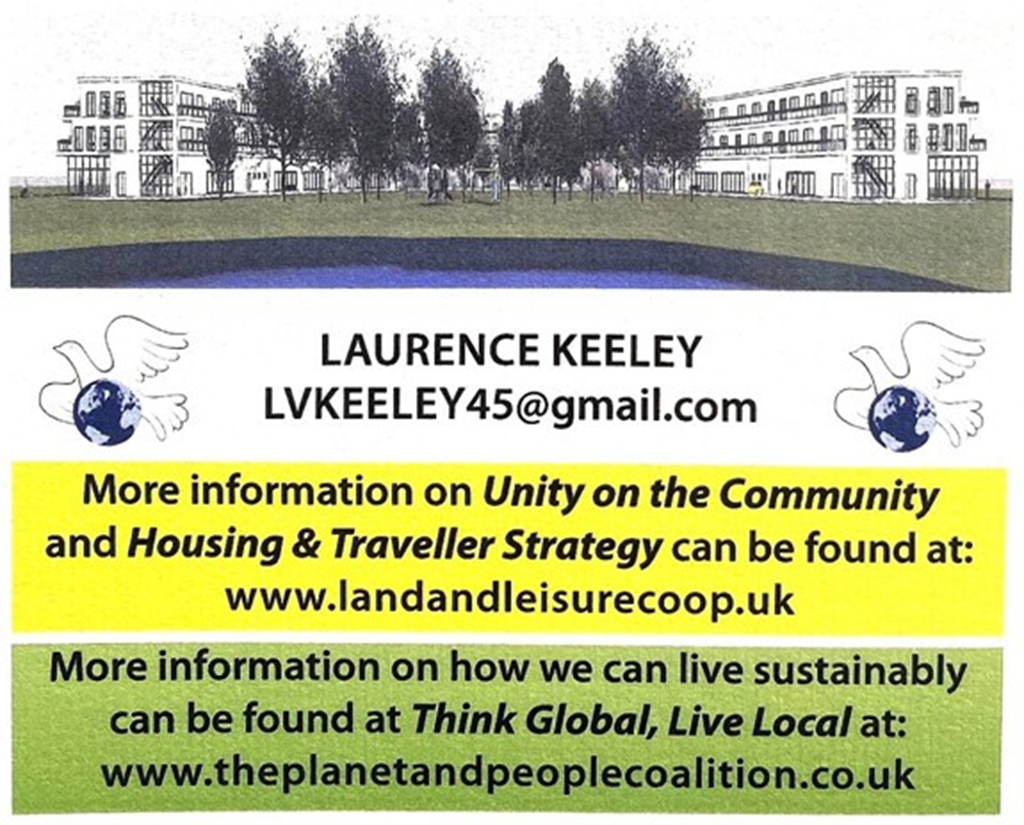
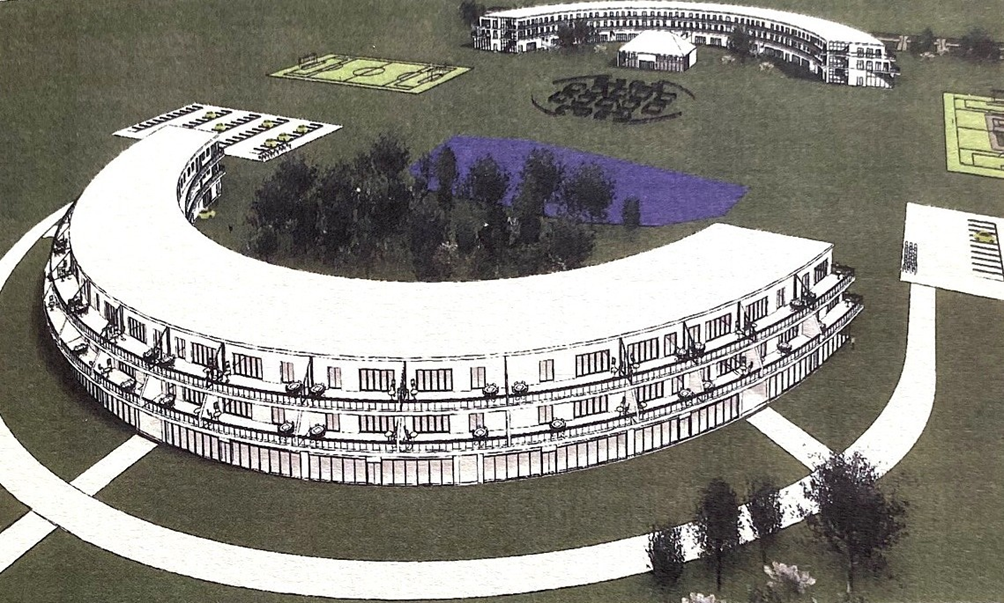
A design as shown above could be built 4 or 5 floors high on new developments, housing a large number of families in one community.
New developments need to include vertical growing areas for fresh vegetables to feed residents, utilising rainwater harvesting for their irriga-tion. Solar panels would help power to run buildings. There should be rec-reation areas, sport areas and natural habitats for protecting wildlife.
This style of development encourages intergenerational living, increasing everyone’s health and well-being, which in turn reduces mental health issues, obesity and diabetes. A child care facility along with an elderly care setting should be within the complex to encourage a reduction in travel needs for already busy lifestyles.
There should also be office space for suitable businesses and light industry units close to the homes but far enough away so as not to become too noisy, and saving congestion.
The Government believes the way forward is more people renting homes, but, rents never end. When those paying rent retire, their pensions won’t cover the rents, especially private rents. The state will be paying out bil-lions in housing benefits. One should not have to pay a mortgage or rent after one becomes pensionable age, and that that should not be beyond 66 years.
Developers have a lot to answer for regarding the issues we are now experiencing.
I would recommend cap development land equivalent to 100 years from farming each acre of land. Build homes as in the style above, using British steel as a frame off ground to save flooding, with module homes they could be sold at cost, while only being sold back to the Community Land Trust, not onto the market.
Much of our aging populations loneliness and the younger generation’s antisocial behaviour stems from poor housing estate design and lack of affordability.
Young people coming out of Care often become homeless. New develop-ments should include a place where children in the care system could be housed and brought up in family environments/assisted living until they be-come adults, rather than being bounced around several different foster homes. This saves moving several times and becoming a generation of of people who have no one as real a guardian. These young people would become better adults, having a sense of belonging.
The Government 10 Year Health plan released earlier this summer sets out an ambitious vision to being care closer to local Communities. It promises a network of integrated neighbourhoods services to create an NHS fit for the future. But updating healthcare facilities alone isn’t enough—a holistic approach to health must involve the private as well as public sector.
|
|
Thoughtful housing design at an early stage can shape places that nurture health, strengthen social connection and reduce pressure on the NHS, argues Chris Scott.
Chris Scott is Development Director & ESG Lead, Southern Team of Muse Development.
Chris Scott is reported to have written:
Developers have their role to play and must now rise to the challenge of designing housing that actively promotes health and well-being.
Our homes are where we spend the vast majority of our time, shaping how we live, work and travel. In doing so, they profoundly influence our health. When designing thoughtfully, new homes can encourage healthier lifestyles and reduce pressure on the NHS. For developers, two of the biggest opportunities lie in better connectivity and access to safe welcoming green spaces.
Health driven infrastructure.
Physical inactivity costs the NHS an estimated £900 million every year. The most forward thinking developers are already placing health at the centre of place-making, starting with infrastructure. Well-connected sites with high-quality walking and cycling routes enable seamless active travel, helping residents weave healthy habits into daily life. Providing supporting infrastructure can also boost property values and streamline the planning process, with policy frameworks favouring well-connected sustainable sites.
Developers must look beyond their red-line boundaries. The health of a place is shaped as much by it’s connections to surrounding infrastructure as by what lies within it’s footprint.
Ensuring residents can walk, wheel and cycle to schools, healthcare Facilities, workplaces and transport hubs requires collaboration with local authorities, infrastructure providers and community organisations. Great place-making is holistic: it interlinks homes, amenities and mobility into a single cohesive ecosystem.
Everyday access to greenery—whenever through tree-lined streets, pocket parks, private balconies or views of rovers or canals—can deliver mental and health benefits. Successful schemes weave nature throughout the built environment, treating it not as an optional extra but as an essential feature of urban living.
Designing health into the public realm must remain a priority. The long-term payoffs to communities and the NHS are immense.
If green spaces feel unsafe, they will go unused, particularly by women, older adults and those with mobility challenges. Developers can address this by creating environments that feel welcoming and secure.